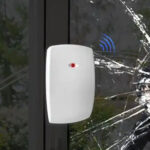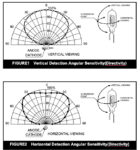
With the rapid development of the Internet of Things, artificial intelligence, and 5G technologies, smart homes are transforming from a concept into reality. Their core objective has evolved from simple remote control to building a smart living environment that proactively senses, makes autonomous decisions, and provides personalized services . Within this system, security remains the most basic and core demand of users. If smart door locks are the “gatekeepers” of the home, then the outdoor passive infrared detectors distributed throughout the perimeter act as “sentinels” and “early warning systems,” extending the boundaries of security from indoors to the outside, thus constructing the first intelligent line of defense for home safety.
Outdoor infrared detectors, as sensors that utilize the pyroelectric effect to detect infrared radiation from the human body, occupy a crucial position in smart home security systems due to their non-contact, all-weather, and passive concealment characteristics. This article will delve into their multiple roles in the smart home ecosystem and look ahead to their future development prospects.
I. Core Role: From Single Alarms to Intelligent Sensing
Outdoor infrared detectors have long surpassed the traditional single function of “alarming upon detecting an intruder.” In the context of smart homes, they have been endowed with richer connotations and more complex tasks.
1. Role One: Perimeter Intrusion Detection and Deterrence – “Electronic Fence”
This is the classic and most fundamental role of an outdoor infrared detector.
Working principle: When a moving human body (or animal) with a temperature higher than the background temperature enters the detection area, it will change the distribution of the infrared radiation emitted by the animal. After the PIR sensor detects this change, it will trigger an alarm signal.
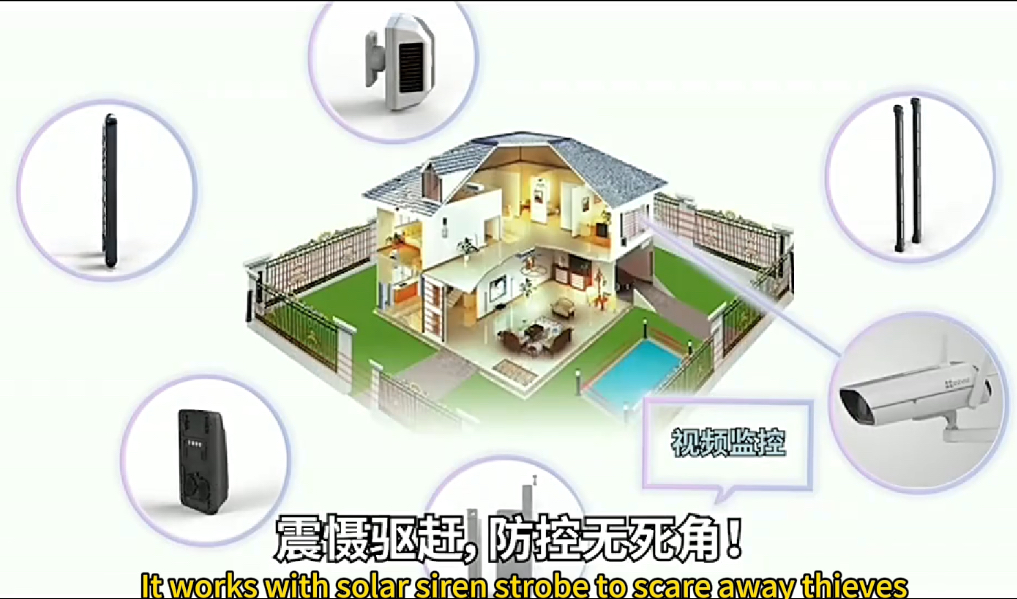
In smart homes, this manifests as a complete response chain through integration with smart gateways, sound and light alarms, and smart cameras. For example, when a detector detects someone climbing over a wall at night, it can immediately trigger the following:
The sound and light alarms went off, effectively deterring the intruders.
The system automatically activates the smart cameras around the perimeter of the courtyard wall to record high-definition video and capture images.
The system pushes alarm information with screenshots of the scene to the homeowner’s mobile app, allowing the user to understand the situation immediately.
The integrated intelligent lighting system instantly illuminates the lights along the intrusion path, providing a clear picture for evidence collection and also serving as a secondary deterrent.
2. Role Two: Scene Awareness and Environmental Adaptation – “The Eye of Wisdom”
Modern outdoor PIR detectors are no longer isolated sensors, but rather nodes in a smart home sensing network, capable of providing rich environmental context information.
Presence detection : It can not only detect intrusions, but also sense the legitimate approach of family members or visitors. For example, when the homeowner returns home and walks to the front door, the PIR detector senses the movement and can trigger the smart lock to unlock in advance, or trigger the entryway light to turn on automatically, achieving a user-friendly experience of seamless access.
Behavioral pattern learning : By combining AI algorithms, the system can learn the daily activity patterns of family members. For example, it can distinguish between activities at 7 a.m. on weekdays and 3 p.m. on weekends, thereby reducing false alarms and increasing vigilance when activities occur at unusual times.
Environmental Adaptability : Outdoor PIR detectors are resistant to environmental interference and can effectively filter out non-threatening heat sources such as direct sunlight, flashing car lights, wind-blown grass and trees, and small animals (such as cats and dogs) through multi-zone detection and fuzzy logic analysis, which greatly reduces the false alarm rate of the system and improves its reliability.
3. Role Three: The Trigger for Energy Saving and Automation Control – The “Invisible Butler”
Another important goal of smart homes is energy saving and convenience. Outdoor PIR detectors can also play a clever role in this regard.
Smart lighting: This is the most direct application. When the detector senses someone approaching the garage, yard path, or doorway, it automatically turns on the lighting in the corresponding area and turns it off after a delay when the person leaves, which is both convenient and energy-saving.
Landscape Integration: During festivals or family gatherings, you can set up fountains, colored lights, and other landscape features to automatically turn on when someone is in the courtyard, creating a special atmosphere.
Energy Management: In large residences such as villas, it can be linked with the outdoor units of the HVAC (Heating, Ventilation and Air Conditioning) system. When no activity is detected for an extended period of time, the temperature control priority of that area can be temporarily lowered to achieve more refined energy management.
II. Technological Challenges and Development Prospects
Despite the promising prospects, outdoor PIR detectors still face challenges in integrating into more advanced smart home systems, and their future development revolves around solving these problems.
Current challenges:
False alarm rate : This is the biggest obstacle to user experience. Severe weather (rain, snow, fog), environmental heat sources (heating chimneys, air conditioner outdoor units), and ubiquitous small animals all place high demands on the detector’s algorithm.
The contradiction between detection distance and coverage : In theory, the farther the detection distance, the better, but increasing the distance will lead to a narrower field of view, decreased accuracy, increased power consumption, and blind spots are easily generated in complex courtyard environments.
Privacy concerns : Unlike cameras, PIR detectors only sense “heat” and “motion” and do not collect images, which is an advantage in terms of privacy. However, if they are not properly integrated with cameras, or if users do not understand their principles, concerns may still arise.
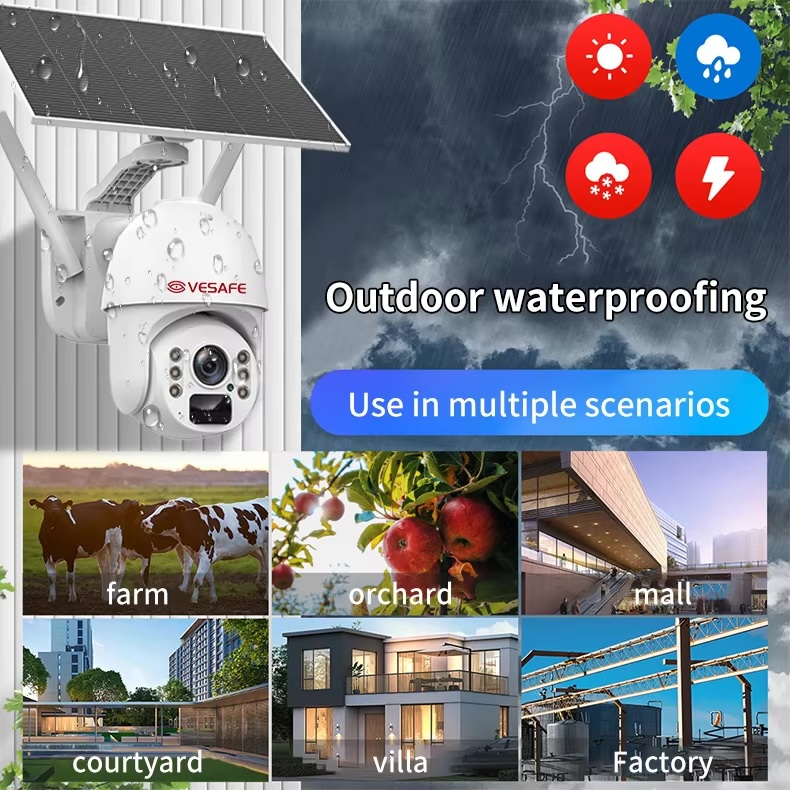
Environmental adaptability : Temperature, humidity, dust, and corrosive gases (such as salt spray in coastal areas) can affect the long-term stability and lifespan of the detector.
Future development prospects and trends:
Multi-sensor fusion is becoming mainstream:
PIR + AI Camera : This is a promising combination. The PIR acts as a “trigger” and “coarse screen,” only waking up the high-power camera for high-definition recording and AI analysis (such as human and vehicle recognition) when movement is detected, achieving “on-demand operation” and balancing low power consumption, high privacy, and high accuracy.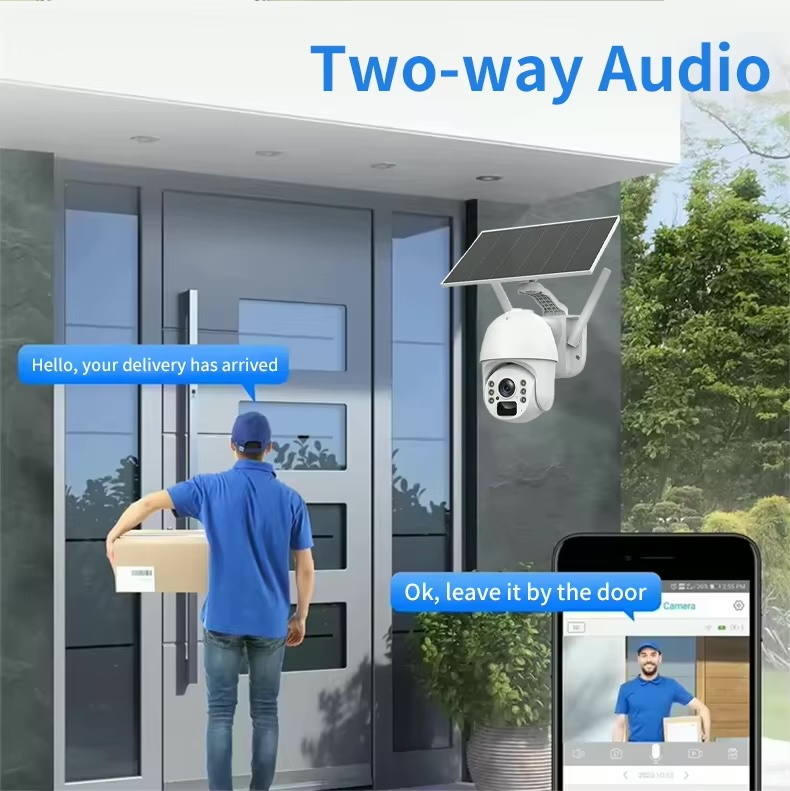
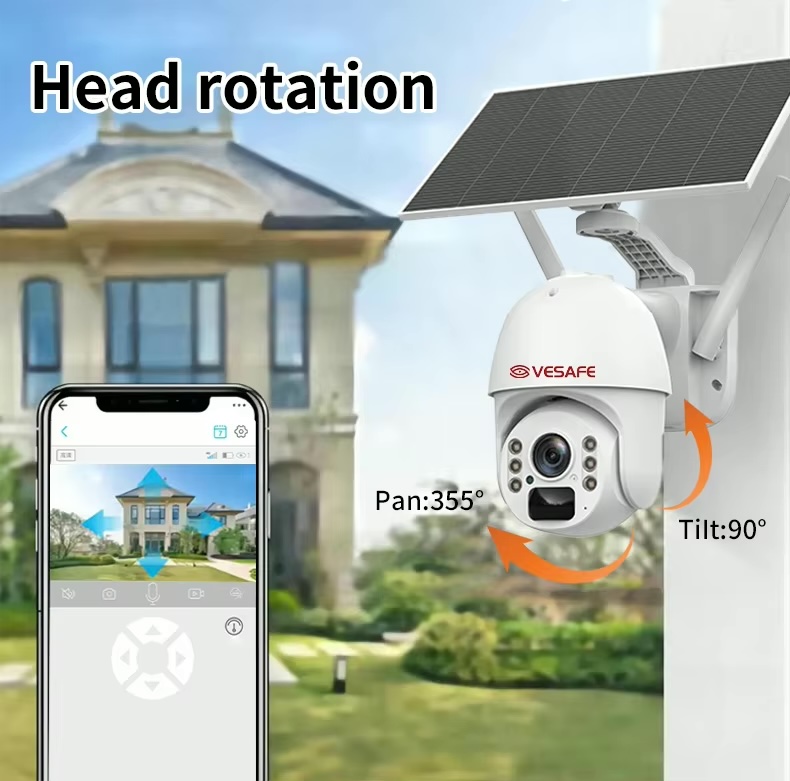
PIR + millimeter-wave radar : Radar can provide precise distance, speed, and micro-motion information. Combining the two can better distinguish between people and pets, and between normal walking and climbing, greatly improving the accuracy of the identification.
PIR + Environmental Sensors : By integrating data from temperature, light, and sound sensors, a more comprehensive environmental model is built, making the system’s decision-making more intelligent.
Deep integration of artificial intelligence and deep learning algorithms :
Future PIR detectors may incorporate dedicated AI processing chips, enabling them to learn more complex behavioral patterns and identify anomalies locally, reducing reliance on the cloud and achieving faster response times and better privacy protection.
Ultra-low power wide area network and self-powered technology :
Leveraging LPWAN technologies such as LoRa and NB-IoT, outdoor PIR detectors can achieve ultra-long-distance, ultra-low-power data transmission, eliminating reliance on local gateways and enabling more flexible deployment. Furthermore, combined with solar power technology, they can achieve true “wiring-free and maintenance-free” operation.
Greater integration and stealth design :
The detectors will become smaller and more aesthetically pleasing, better integrating into architectural and landscape environments. At the same time, their functionality will be further integrated, for example, combining PIR, lux meters, and temperature sensors into a single device to provide richer sensing data.
A paradigm shift from “security” to “proactive service” :
Future outdoor PIR detectors will be more deeply integrated into the smart community ecosystem. For example, they can be linked with community parcel lockers and property management services. When a delivery person is detected waiting at the door for an extended period, the detector can notify the property management to provide assistance, extending security functions to the level of daily life services.
In conclusion
Outdoor passive infrared detectors are the “sensory organs” in smart home security systems. They have evolved from passive alarm sentinels into “smart nodes” capable of sensing scenes, triggering automation, and collaborating with other smart devices. Although challenges remain in dealing with complex environments and reducing false alarm rates, their role will inevitably become more diverse and intelligent with the rapid development of multi-sensor fusion, artificial intelligence, and new communication technologies.
Looking to the future, outdoor PIR detectors will no longer be just cold security devices, but will become “invisible guardians” that can understand user behavior, protect home safety, and proactively provide convenient and energy-saving services, playing an increasingly crucial role in building a safer, more comfortable, and smarter future living environment.